Climate Change Education Guidelines for Aotearoa NZ
These Climate Change Education Guidelines support teachers and schools to prioritise the well-being of children and young people while preparing them to thrive in a world impacted by a changing climate.
This project originated from work developed under the umbrella of the Aotearoa Climate Education Coalition (ACEC) with the generous assistance of researchers, teachers and educators, from Aotearoa New Zealand and beyond. In January 2026, teachers from throughout Aotearoa came together to share their experiences and ideas about how to nurture young people’s understanding, skills and agency to care for the long-term wellbeing of people and our planet.
We welcome your feedback on this work. Please use the ‘Get Involved’ button on the ACEC website to connect with us.
Our first step is to share a set of dispositions and capabilities that we believe are important for learners to develop through meaningful Climate Change Education. We are continuing to develop other aspects of the guidelines, which will be published here in due course. These will include key concepts, practices and pedagogies, as well as case studies that showcase how Climate Change Education might look across different education settings.
Click on the button above left to download a PDF version of the full document.
In these Guidelines:
- Dispositions are the ways ākonga can think, feel and act as learners.
- Capabilities are what ākonga draw on and use to apply their learning in different situations.
For Aotearoa New Zealand, the set of dispositions and capabilities for Climate Change Education presented below have been informed by a range of sources (see Appendix). Together, they provide a foundation for developing learners’ understanding of the Earth’s climate and the ways human activities influence it, alongside the dispositions and capabilities for making informed decisions and participating in individual and collective action for a climate-resilient future.
Dispositions and Capabilities for Climate Change Education
Whānau Tangata | Cultural Fluency: Demonstrating empathy and respect in diverse cultural contexts. In Aotearoa New Zealand, this is grounded in Te Tiriti o Waitangi Articles. Climate change education recognises the historical and ongoing processes of colonisation that have disrupted relationships with te taiao. By upholding te ao Māori, we can work together to restore our relationship with te taiao.
Te Ao Tūroa | Ecological Connectedness: Thinking about and feeling our reciprocal relationship within nature. Understanding that climate change is impacted by interconnected environmental, social, cultural and economic systems and processes, and reflecting on our responsibilities to care for te taiao.
Wise Meaning-Making: Critically evaluating information and evidence to deepen understanding of complex issues relevant to climate change. Interpreting and/or creating information that contributes to informed dialogue and collective action. Recognising how values, worldviews, assumptions and narratives shape understanding. Using digital technologies thoughtfully, maintaining human judgement, agency and awareness of the environmental, social, cultural and economic impacts of these technologies.
Creative Problem Solving: Approaching complex issues with curiosity, open-mindedness, innovative and imaginative thinking, experimentation, and comfort with uncertainty. Researching and gathering diverse knowledge to help formulate possible solutions. Ability to engage in thinking about the past and the future to consider possible consequences of a solution. Realising that solutions are imperfect, ongoing and involve compromises.
Mahi Tahi | Collective Agency and Leadership: Having the courage, confidence, and competency to act toward restoring our relationship with te taiao / the environment and addressing the challenges of climate change. Recognising individual capacity to change, while also working together through relationships and collaboration. Supporting tino rangatiratanga and drawing inspiration from innovative change-making efforts locally, nationally and globally. Leading through partnerships, shared vision and inclusivity.
Adaptive Resilience: Responding to adversity by maintaining wellbeing, emotional regulation, and hope. Fostering individual and collective resilience to cope with uncertainty and adapting to change due to climate.
Click on the button above left or here to download a PDF version of the full document, which includes examples of what each disposition / capability could look like and some resources to get you started.
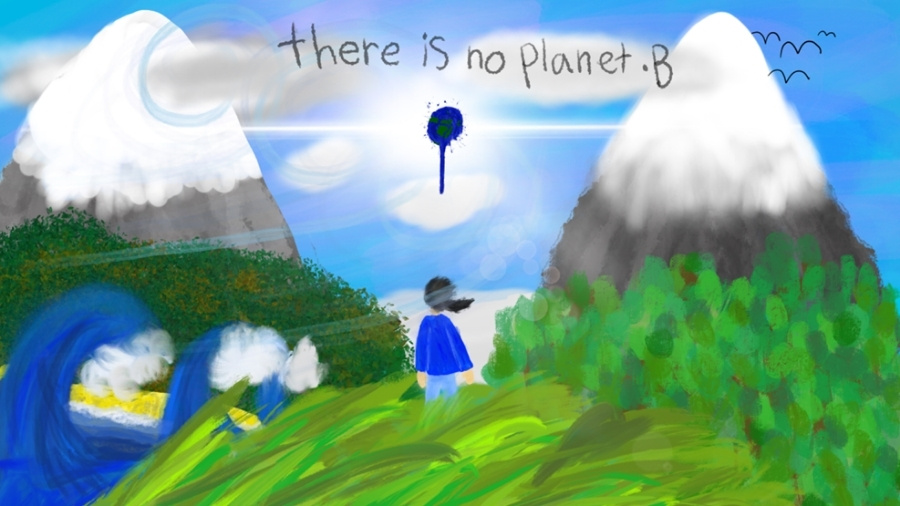
Main image credit: Matthew Baigent. Winning artist, 10 and under category, Generation Zero Art Exhibition
.jpg)