NZAEE Webinars: Sustainability Education in Secondary Schools
This page includes the links to two recorded webinars that took place in Term One, 2026, with a focus on supporting and celebrating sustainability education in secondary schools.
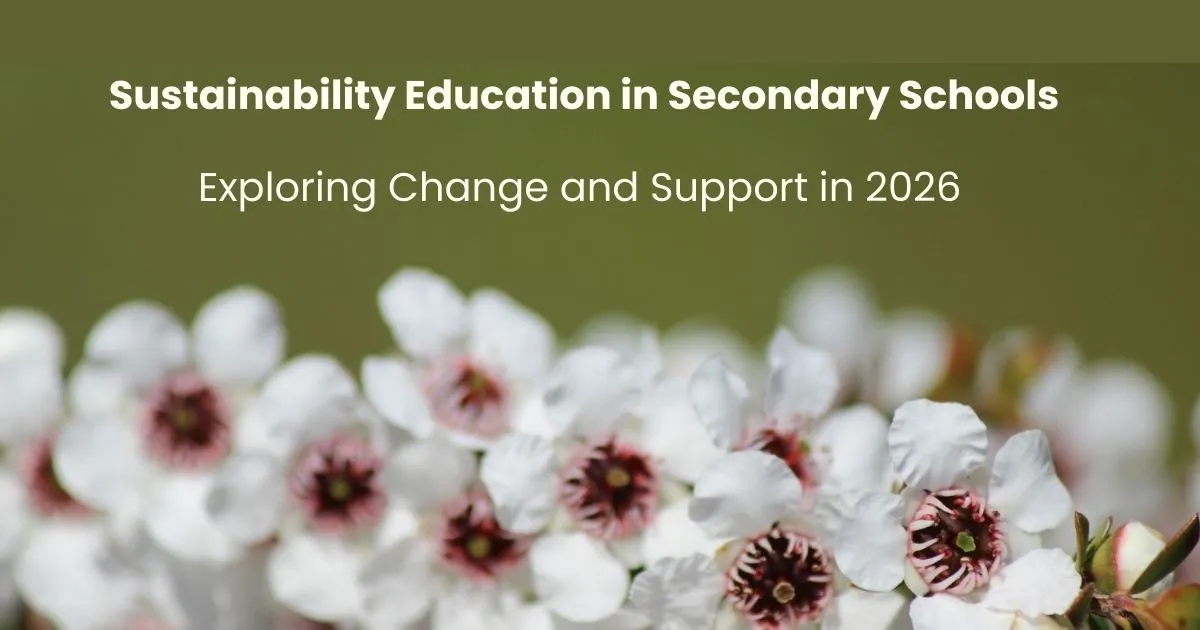
Exploring Change and Support in 2026
This webinar took place on Feb 11th with NZAEE facilitators Becky McCormack and Lyn Rogers. This session was an introduction to our work with secondary teachers this year, including:
- Building understanding - curriculum and assessment
- Sharing questions, concerns and solutions
- Networking/communications
- Support we can provide this year
Watch the recording here and you can access related resources and links, along with a summary of the discussion in the sections below.
Authentic Integration of Sustainability Education for Secondary Learners
This webinar took place on March 12th with NZAEE facilitator Lyn Rogers and guest speaker Yotam Kay, who shared examples of how environmental and sustainability education can be integrated at both the junior and senior levels within secondary schools.
Watch the recording here and access related resources and links below.
Key Resources and Links
For more support from NZAEE please complete this Secondary Teacher Survey
Teaching resources:
Secondary Education: Inspiration and Support
Sustainability education - enough for all, forever Lyn also has some hard copies available on request (email us) and a you can watch a webinar unpacking the resource here.
Support from Providers:
Curriculum and Assessment:
Tāhūrangi: Curriculum Consultation
Education for Sustainability - NZQA
Reviewed NZC & TMoA Achievement Standards and assessment materials published for 2026 - check this for updates to NCEA changes - RAMP (review and maintenance programme for NCEA).
Links from Yotam's slides:
2025 - launch of food waste program Video link
See also: Enviroschools: Hauraki Plains College Students Lead Waste Transformation
Summary of Webinar Discussions
Our February webinar included 25 participants, with a mixture of secondary teachers and environmental education providers.
How could we manage networking and sharing ideas?
- Padlets have been a great way to collate resources for sharing
- Regular zooms like this would be useful
- Subject based
- Standards based
- Sometimes regionally based?
- Time for general discussion and sharing resources / advice
Regional and in person support
Secondary education PLD and support across Terms 1 - 2 will be taking place in collaboration with other providers such as Enviroschools, Go Eco and Town Belt Kaitiaki, with locations confirmed in Waikato, Ōtākou and Porirua. If you're based in these areas and want to find out more, please connect with your regional Enviroschools team (see here) or get in touch with NZAEE and we'll connect you with the right person. For other regions, we will be planning other events and working with local providers to support teachers and schools.
Question from secondary teacher: How can teachers and kura support you in advocating for Education for Sustainability to be maintained as a senior subject? (4 others support this). Answer from NZAEE: please let us know about the EfS courses, projects etc that you're currently using with students and we will share these to help advocate for the subject and also to inspire and support other schools.
Our March webinar included 15 participants including secondary teachers and environmental providers who are involved with a range of inspiring projects and contexts across the motu. Some of these included:
- Student leader enviro clubs meeting outside class time, with some including teachers and staff
- Hosting events to celebrate environmental actions in schools and the community
- School gardens and horticulture areas integrated within courses, including technology students building planter boxes
- Pest monitoring and trapping within school grounds and local neighbourhood
- Restoration, native planting on school grounds or neaby areas, including wetlands and awa
- Waste reduction and monitoring led by student groups, including composting, bokashi
- Connections with English using the Sustainable Development Goals
- Ocean acidification, biodiversity monitoring, microplastics research in the sciences
- Immersive nature experiences outside school for students to develop leadership and conservation skills
.jpg)